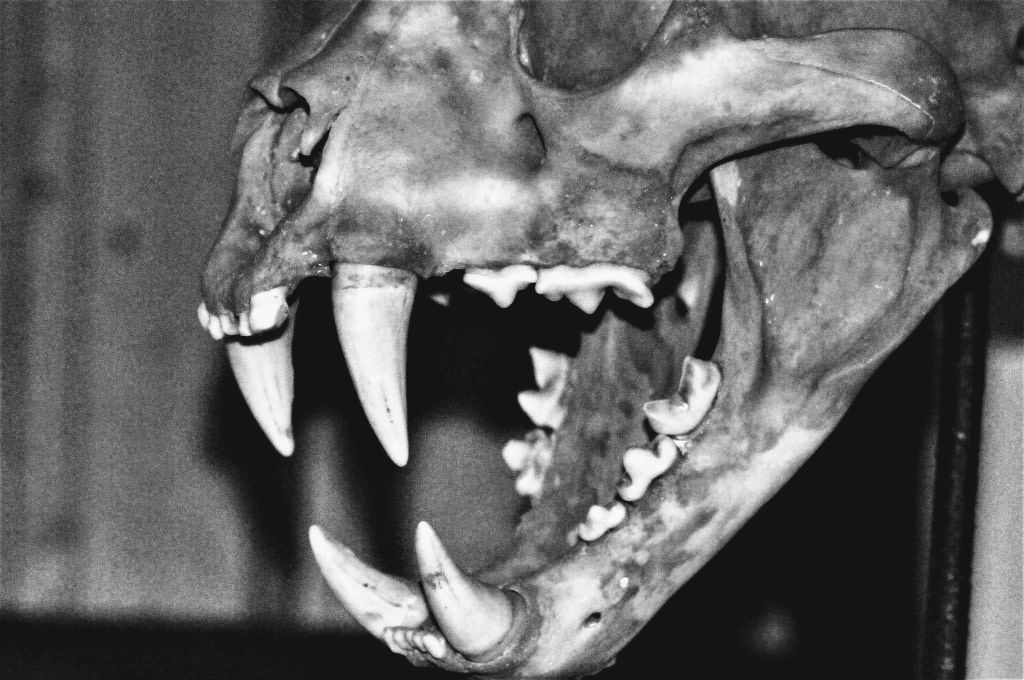
When you envision the Sundarbans tiger, it’s not just its mesmerizing eyes that come to mind, but every part of its being: its powerful skull, formidable body, and lethal paws. The Sundarbans, while breathtakingly beautiful, is one of the most challenging tiger habitats in the world. This unforgiving terrain has shaped the Royal Bengal Tiger into a perfectly adapted apex predator, forcing it to hunt a wide variety of prey to survive.
As a result of these adversities, every part of its body has been honed to become incredibly sharp and powerful. Let’s take a deep dive into the physical characteristics of the Sundarbans tiger that make it a true master of its domain.
The Tiger’s Skull: The Engine of the Bite
The skull of a male tiger can measure around 11 to 13 inches in length, while a tigress’s is about 10 to 12 inches. Its solid, robust skull is the foundation for its terrifying jaw power, with the skull alone weighing as much as 300 grams. This unique cranial structure is specifically adapted for hunting.
A tiger’s skull supports its wide, powerful jaws. Its immense jaw muscles are attached to a prominent ridge on the top of the skull called the sagittal crest. This anatomical feature is the secret behind a tiger’s incredible bite force, allowing it to clamp down on prey with frightening strength and precision.
Furthermore, a tiger’s clavicle (collarbone) is relatively small. This unique trait lengthens its stride, as a smaller clavicle allows for a wider range of movement for the scapula (shoulder blade). This greater flexibility is a significant advantage when running and pouncing.
In the local lore of the Sundarbans, forest-dwellers speak of different tigers. One is the “Boro Matha Bagh” (Big-Headed Tiger), known for its fearless temperament. Another is the “Chuncholo Mukh Bagh” (Pointed-Face Tiger), a master of surprise attacks. Anyone who has witnessed a tiger effortlessly leap onto a high riverbank or run with prey in its mouth knows the immense power originating from its jaw and shoulder anatomy.
The Tiger’s Body: A Fortress of Muscle
When measuring a tiger’s length from head to tail, a male is typically 9-10 feet (106 to 122 inches), and a female is 7-9 feet (94 to 104 inches). Their shoulder height is about 2.5 to 3.5 feet. In terms of weight, a male averages 200 to 250 kg and a female 130 to 160 kg. However, the unique conditions of the Sundarbans mean that tigers both larger and smaller than this average are frequently observed.
This immense physical power is why a forest proverb says that during an attack, hitting the tiger’s body is useless. Sometimes, a victim can be saved only by striking its sensitive nose or ears, or by throwing mud in its eyes to disorient it. The scars seen on many Sundarbans tigers are a testament to their aggressive encounters, not just with prey but also in human-wildlife conflicts, where they face counter-attacks.
Paws and Legs: The Mechanics of a Perfect Leap
A tiger that can swim across vast rivers like the Raimangal and Matla at speeds of 12-13 km/hour possesses unimaginable strength in its shoulders and legs. A tiger’s leaping ability is legendary. Forest-dwellers speak of the tiger’s charge through thick mud, describing it as a striped sphere rushing towards them in an instant.
Eyewitnesses of tiger attacks often mention its incredible leap, which can easily cover a distance of 20 to 30 feet. This explosive power comes from its hind legs being longer than its front legs. The bones in its forelegs are designed with superior strength and density, built to absorb the impact of a pounce and bring down large prey. This powerful combination of muscle and bone structure is what makes the tiger a master of the ambush.
The force of a tiger’s paw strike is terrifying. A single, well-aimed swipe is often enough to neutralize its target. The few who survive such an encounter are forever marked by the raw power they faced—a brutal signature left on the neck, chest, or back.
Frequently Asked Questions about the Sundarbans Tiger
Why are Sundarbans tigers considered more aggressive?
Sundarbans tigers live in a harsh environment with high salinity in the water and challenging terrain. This constant struggle for survival, coupled with less availability of large prey compared to other habitats, has made them more adaptable and opportunistic hunters. This leads to a higher rate of human-tiger conflict, often perceived as aggression.
How powerful is a tiger’s bite?
A tiger’s bite is incredibly powerful, thanks to its strong jaw muscles attached to the sagittal crest on its skull. It can generate a bite force of about 1,050 PSI (pounds per square inch), which is strong enough to crush the bones of its prey.
How far can a Royal Bengal Tiger jump?
A Royal Bengal Tiger can perform astounding leaps. Horizontally, it can jump a distance of 20 to 30 feet (6 to 9 meters) in a single bound. This ability is crucial for ambushing prey from a distance.
Are tigers in the Sundarbans good swimmers?
Yes, Sundarbans tigers are exceptional swimmers. The unique mangrove delta environment, crisscrossed by rivers and creeks, has forced them to adapt. They can swim for several kilometers across wide rivers and are known to hunt prey in the water.
What is the main diet of a Sundarbans tiger?
The diet of a Sundarbans tiger is more varied than in other regions. While their primary prey is spotted deer (chital) and wild boar, they are also known to hunt rhesus macaques, fish, crabs, and monitor lizards due to the unique ecosystem.
 Samiran Mandal