The Sundarbans mangrove forest is a land of wonders, where tree roots reach for the sky and fish can climb them. This is the incredible world of the mudskipper, a fish that thrives both in and out of water, embodying the unique spirit of the jungle. This article explores the life, behavior, and ecological importance of this fascinating creature.
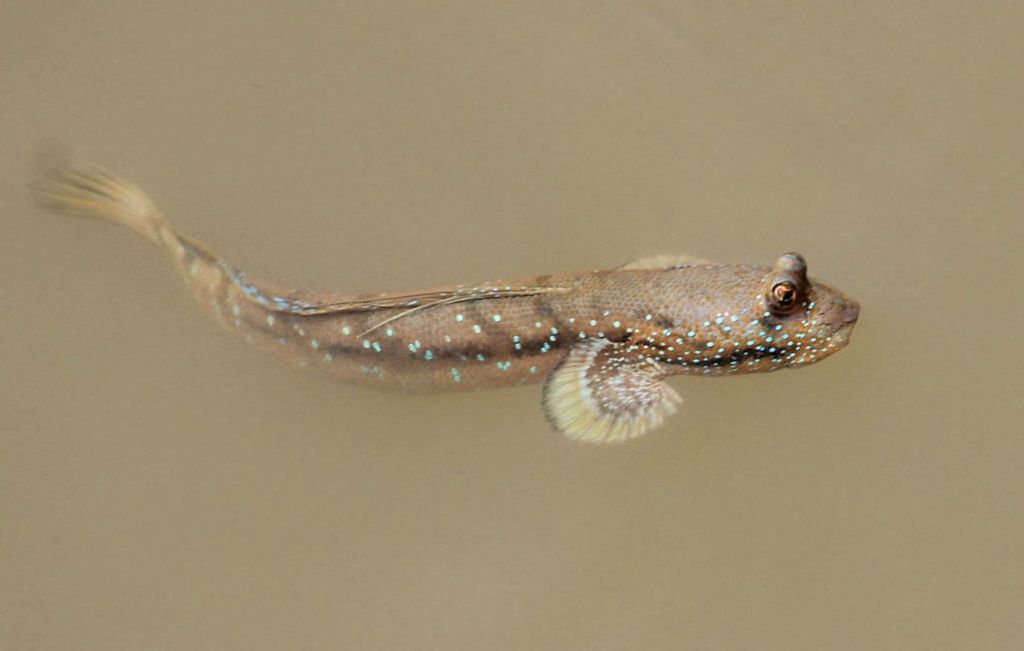
A Master of Two Worlds: The Unique Adaptations of the Mudskipper
Mudskippers are able to spend significant time on land thanks to a series of incredible evolutionary adaptations. They are a prime example of how life can conquer challenging environments.
- Breathing on Land: As long as their skin remains moist, mudskippers can absorb oxygen directly through the lining of their skin and mouth. They also trap a bubble of water in their large gill chambers, which acts like a natural scuba tank, allowing them to stay on the mudflats for extended periods.
- Walking on Fins: Mudskippers possess powerful and modified pectoral fins that function like legs, allowing them to “walk,” crawl, and skip across the mud. When the tide rises, younger mudskippers use their pelvic fins, which are fused into a suction cup, to cling to the stilt roots of mangrove trees, climbing higher to escape the water.
- Thermoregulation: To control their body temperature in the heat, mudskippers will either bask in the sun to warm up or take a dip in the water to cool down, just like a reptile.
A Fierce Defender: The Territorial Behavior of Mudskippers
Mudskippers are extremely territorial animals, and this behavior is central to their survival and reproductive success. This behavior was recently captured on camera by wildlife enthusiast Tisha Mukherjee in a narrow drain in the Basirhat Range, highlighting their constant struggle for dominance.
The Battle for Resources and Mates
Competition among male mudskippers is fierce. They fight to secure and defend a territory that offers a reliable food supply, a safe burrow, and the best chance to attract a mate. A male’s ability to successfully build and defend a nest is a primary factor for a female when choosing a partner, as it signals his strength and ability to protect their future offspring.
During these territorial disputes, males engage in dramatic physical displays, flaring their dorsal fins to appear larger and more intimidating. These displays often escalate into physical conflict as they fight to maintain their domain. The size and quality of a territory directly impact an individual’s social standing and reproductive success.
Protecting the Next Generation
This territoriality is most pronounced during the breeding season. After mating, the male mudskipper takes on the active role of guarding the burrow, which contains the eggs, from predators. His success in defending the territory ensures that more of his offspring will survive to adulthood, passing on their genes to the next generation.
Ecosystem Engineers: The Importance of Mudskippers in the Sundarbans
Beyond their fascinating appearance and behavior, mudskippers are a keystone species in the mangrove ecosystem.
- Nutrient Cycling: Their constant burrowing activity aerates the dense mud, which not only helps mangrove roots breathe but also plays a crucial role in nutrient cycling, ensuring the soil remains fertile.
- Indicator Species: The health and population density of mudskippers serve as a vital indicator of environmental change. A decline in their numbers can signal pollution or damage to the intertidal habitat, making them essential for conservation monitoring.
Frequently Asked Questions (FAQ) about Mudskippers
Q1: Can mudskippers really climb trees?
A: Yes, in a way. Mudskippers use their powerful pelvic fins, which act like a suction cup, to cling to the lower roots and trunks of mangrove trees, especially during high tide. This allows them to stay out of the water and escape aquatic predators.
Q2: How do mudskippers breathe on land?
A: Mudskippers have a multi-faceted breathing system. They can absorb oxygen through their moist skin and the lining of their mouth and throat (cutaneous respiration). They also hold water in their gill chambers, which allows them to extract oxygen even when they are on land, much like a diver using a scuba tank.
Q3: Why are mudskippers so aggressive and territorial?
A: Mudskippers are territorial primarily to secure essential resources for survival and reproduction. Males fight to control a patch of mudflat that provides food, a safe burrow for shelter and nesting, and access to potential mates. A good territory signals strength and increases their chances of successfully raising offspring.
Q4: What do mudskippers eat?
A: Mudskippers are carnivores and scavengers. Their diet consists mainly of small crabs, insects, worms, and other invertebrates that they find on the mudflats during low tide.
Q5: Why are mudskippers considered an “indicator species”?
A: An indicator species is an organism whose presence, absence, or health reflects the specific environmental condition of its habitat. Because mudskippers are highly sensitive to changes in water quality, pollution, and the physical state of the mudflats, a healthy mudskipper population indicates a healthy intertidal ecosystem. Conversely, a decline in their population can be an early warning sign of environmental problems.
 Samiran Mandal
2 responses to “The Mudskippers of the Sundarbans: An Amphibious Marvel of the Mangroves”
as always…..fascinating as my mind expands to the Sundarbans! Thanks for sharing this.
LikeLiked by 3 people
We used to have some in our well and during monsoon they used to get inside the house. Thay are a sturdy lot.
LikeLiked by 2 people