Discover the legend of Borokhan Ghazi, the tiger-god of the Sundarbans and a timeless symbol of Hindu-Muslim unity. Explore the history, miracles, and the living shrine of Ghutiari Sharif, a testament to faith that transcends borders and religions.
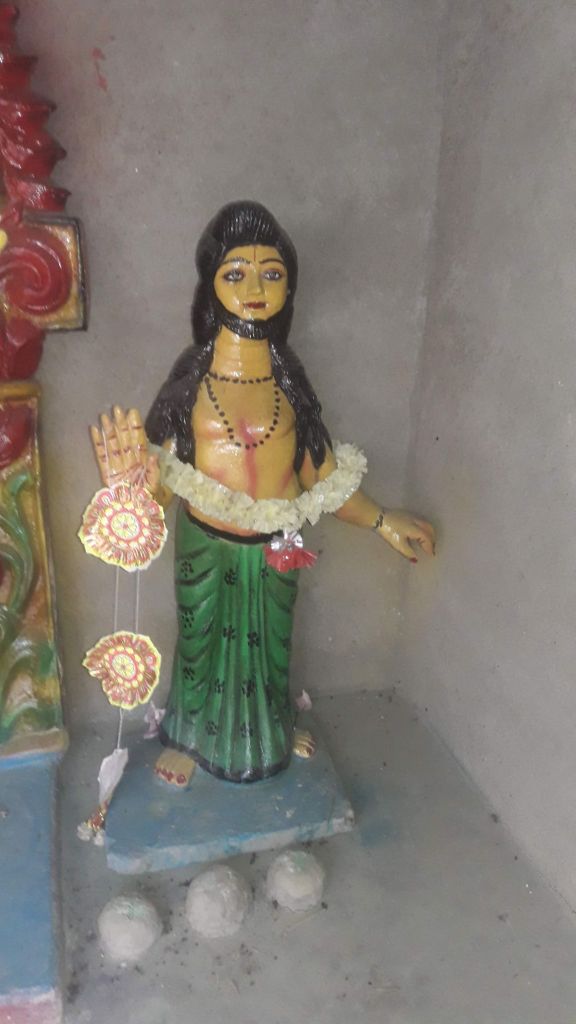
The soil and water of Bengal are not just imbued with the scent of alluvial clay; its air is alive with a thousand legends, folktales, and stories of faith. These narratives are not confined by the boundaries of any single religion or community; they are an inseparable part of the culture of its people. One such legendary figure is Pir Borokhan Ghazi—revered and celebrated in both Bengals by names like Ghazi Baba, Ghazi Saheb, Mobarak Shah Ghazi, and Barkhan Ghazi. He is not merely a pir (Sufi saint); he is the tiger-god of the Sundarbans, the protector of the perilous jungle, a passionate lover, and a living symbol of Hindu-Muslim harmony. His tale is no ordinary history; it is an epic of faith, miracles, and love that continues to thrive in the hearts of millions, from Jhenaidah’s Barbazar in Bangladesh to Ghutiari Sharif in West Bengal, India.
A Mysterious Origin: Who Was Ghazi Pir?
While a veil of mystery separates the historical accounts from the folklore surrounding Borokhan Ghazi’s true identity, his influence is undeniable. According to legend, he was born into a noble and wealthy family in Bele-Adampur (or Bairatnagar, by some accounts) in West Bengal’s South 24 Parganas. However, worldly riches and luxury failed to entice him. In his youth, he renounced his father’s vast fortune and a life of royalty to become a fakir (ascetic). His singular mission was to spread the message of equality and peace in Islam. With this goal, he, along with a friend, ventured into the mystical riverine landscape of Bengal—the delta region of the Sundarbans, teeming with rivers, canals, and fearsome beasts.
Historians, however, offer multiple theories, making his character even more enigmatic:
- A widely accepted theory suggests he was the son of Zafar Khan Ghazi, a renowned pir from Pandua. If true, this would make him the heir to a traditional Sufi lineage, strengthening the context of his missionary work.
- Celebrated scholar Sukumar Sen proposed that the 14th-century figure, Pir Sufi Khan, evolved over time to become known as Borokhan Ghazi in the 16th century—an example of how legends are shaped and embellished through oral tradition.
- A third theory identifies him with another influential 15th-century pir, Ismail Ghazi.
These differing views suggest that “Borokhan Ghazi” might not have been a single individual but a title or a common identity for the most spiritually powerful Islamic preachers in medieval Bengal.
Regardless of his origins, the statue of him found in Kharigram paints a vivid picture. He is not a serene, meditating ascetic but a warrior-like, majestic hero on horseback. Dressed in pajamas, a chogachapkan (long coat), and a piran (shirt), with a cap on his head, a thick, long beard, a flowing mustache, and sideburns, he exudes authority. His large, expressive eyes, with one hand holding a weapon and the other the reins, signify his firm personality and power. With his booted feet resting in stirrups, the statue is the embodiment of a ruler, a warrior, and a spiritual guide all in one.
The Immortal Love Story of Ghazi and Champabati
Borokhan Ghazi’s life was not limited to preaching and miracles; it was deeply intertwined with a timeless love story. During his travels in the Sundarbans, his closest friend and companion was Kalu. It was on their journey that they encountered the formidable Hindu king, Mukut Ray of Brahmanagar, in the greater Jessore region. This meeting was a turning point in Ghazi Pir’s life, as he fell in love with the king’s exquisitely beautiful daughter, Champabati.
Despite religious differences and immense social barriers, the love of Ghazi and Champabati triumphed, and they were married. This union was not just the coming together of two individuals but a unique example of the blending of two distinct cultures. They had two sons, Dukhi Ghazi and Meher Ghazi. As a testament to this saga of love, family, and friendship, the mausoleums of Ghazi, Kalu, and Champabati stand side-by-side in Barbazar, located in the Kaliganj upazila of Jhenaidah district, Bangladesh. This site is not merely a burial ground; it is a sacred space for people of all faiths, who come to commemorate a historic story of love and harmony.
Lord of the Sundarbans: Miraculous Powers and Dominion Over Nature
When Borokhan Ghazi arrived in the Sundarbans, the region was an impenetrable jungle, a fearsome domain of tigers, crocodiles, and snakes, where humans were helpless against nature’s might. It was at this time that Ghazi Pir, with his miraculous powers, emerged as a protector in the minds of the common people. Folklore says he cleared the jungles in Sonarpur, South 24 Parganas, to establish settlements for people.
His greatest power was his ability to tame the ferocious beasts of nature. Tigers, crocodiles, and snakes were all subservient to his command. He could summon them as his followers at will, even using them as soldiers in battle. He held equal sway over everyone in this riverine land—from kings to commoners, rich to poor. The crocodile-god, Kalurai, was his special friend. This incredible power made him god-like to the local populace. They began to believe that as long as Ghazi Pir was with them, no danger in the Sundarbans could touch them.
A Clash of Dominance, A Victory for Harmony: Ghazi Pir vs. Dakshin Rai
Folktales often speak of conflicts between Ghazi Pir and Hindu deities over his efforts to convert locals to Islam and establish regional supremacy. The most significant of these was his fierce battle with Dakshin Rai, the Hindu tiger-god of the Sundarbans. Dakshin Rai was revered by the Hindus of the delta as the lord of tigers and the ruler of the region. Ghazi’s arrival posed a major challenge to his dominance.
The battle between these two powerful divine entities holds a significant place in Bengali folklore. The famous epic poem Raymangal by the folk poet Krishnaram Das provides a magnificent description of this war. According to the story, as their battle threatened to destroy the entire Sundarbans, the Supreme Being himself intervened to stop the conflict. He appeared not as a deity of a single religion but in an extraordinary syncretic form—half Shri Krishna and half the Prophet, known as “Krishnapaigambar.”
This composite deity pacified them both and established a peace treaty. According to the terms, Dakshin Rai would retain his authority over the entire delta region of the Sundarbans, the crocodile-god Kalurai would gain dominion over the Hijli region, and Borokhan Ghazi would be revered and respected throughout Bengal. In the words of the Raymangal: “Sarbatra saheb pir sabe noaibe shir, keho tahe koribe na mana.” (Everywhere, all shall bow their heads to the Pir Saheb; no one shall defy him.) This incident is an extraordinary symbol of the synthesis of Hindu-Muslim cultures, showing how two different faiths can coexist beyond conflict.
However, not all folk traditions paint this harmonious picture. Epics like Gazimangal or Gazir Gaan depict Dakshin Rai’s defeat and glorify Ghazi’s efforts in converting Hindus. Conversely, Abdul Gafur’s epic, Kalu Ghazi o Champabati, takes this syncretism to a new level, portraying major Hindu deities like Ganga, Durga, Padma, and Shiva as relatives and friends of Borokhan Ghazi. As one line says: “Ganga Durga Shiv giya sakale korito daya, Gazir masi sakale bolito.” (Ganga, Durga, and Shiva all showed him kindness, and everyone called them Ghazi’s aunts.) These varied narratives prove that the legend of Ghazi Pir has evolved over time, reflecting the beliefs and social contexts of the people.
Ghutiari Sharif: A Living Shrine of Miracles and Faith
The shrine of Ghazi Pir in Ghutiari Sharif, located in West Bengal’s South 24 Parganas, remains a living pilgrimage site for people from both Bengals. It is not a place for any one religion but a sacred sanctuary for all—Hindus and Muslims alike. Men, women, and even members of the transgender community come here with wishes in their hearts. A unique custom observed here is that women and transgender individuals do not enter the inner sanctum of the shrine directly; they offer their respects by lighting incense and candles at an adjacent window. Devotees believe that Ghazi Pir is not dead but is a “Jinda Pir” or a living saint, who continues to protect his followers.
Numerous miracles are associated with Ghazi Baba here. The most famous story tells of a severe drought when locals prayed to him for rain. In response, he entered a state of deep meditation (or samadhi). At that moment, a Pathan Muslim, who had come to meet him, mistakenly touched him, thinking he was deceased. Instantly, a divine voice announced that Ghazi Pir was not dead but in a meditative trance. However, due to human touch, his spirit would now become “pardanashin” or veiled from sight. But he assured his devotees that anyone who made an offering (shirni) at the ‘Bhasapukur’ (floating pond) would have their wishes fulfilled. That day was the 7th of Ashadha in the Bengali calendar, the day of Ambubachi. Since then, a three-day fair, known as Ghazi Baba’s ‘Jat,’ is held here every year on this date, followed by the ‘Urs’ festival 41 days later, on the 17th of Shravan.
Unique Rituals of Festivals, Faith, and Harmony
The festivals at Ghutiari Sharif feature unique rituals that are a shining example of Hindu-Muslim harmony. During the festivities, the first offering of shirni (a sweet offering), candles, and perfume is sent from the historic Roy Chowdhury zamindar family of Baruipur. Legend has it that the founder of the Roy Chowdhury family, Madanmohan Roy, was once miraculously saved from a debt to Nawab Murshid Quli Khan by Borokhan Ghazi himself. In gratitude, after receiving the zamindari of the Medinimall pargana, the Roy Chowdhurys donated “pir-ottor” property (rent-free land dedicated to the Pir’s service) here. Because of this historic bond, the festivals still begin with their offering. Another significant aspect is that the consumption of beef is strictly forbidden at this Muslim pir’s shrine, a rare practice that reinforces communal amity.
The beliefs surrounding the ‘Bhasapukur’ (also known as ‘Makkapukur’) are even more astounding. Devotees float offerings of flowers and batasa (sugar candy) in the pond to have their wishes granted. It is believed that if the offering floats back to the person who made it, their wish will soon be fulfilled. But the most incredible ritual is related to prayers for a child. Couples who are blessed with a child after making a vow here dress the infant beautifully, adorn it with flowers and perfume, and float it in the pond inside an earthen pot. Fueled by the devotees’ unwavering faith, the pot with the baby inside always returns safely to a loved one. This miraculous belief continues to draw thousands to this sacred site.
A Pilgrim’s Guide: Journeying from Kolkata to the Ghutiari Sharif Fair
If the glorious tale of Ghazi Pir inspires you to visit his shrine, the journey from Kolkata is very straightforward. Here is a detailed guide, especially for attending the festivals in the Bengali months of Ashadha and Shravan. The best time to visit is during Ghazi Baba’s Jat (annual fair), held for a week starting from the 7th of Ashadha, and the Urs (death anniversary festival), held 41 days later on the 17th of Shravan.
- By Train (Recommended): The train is the best, most affordable, and fastest way to reach Ghutiari Sharif. From Sealdah Station (South Section), board any local train on the Canning line. The train will be marked “Canning Local,” and your destination is Ghutiari Sharif station. Trains run every 15-30 minutes throughout the day. The journey takes about 45-55 minutes, and the fare is approximately ₹10-15. The shrine is a 5-7 minute walk from the station. E-rickshaws (totos) and cycle vans are also available.
- By Car: For those planning to drive, taking the EM Bypass is the most convenient route. Follow the EM Bypass, cross the Kamalgazi flyover, and take the Baruipur-Canning Road. Using Google Maps will make navigation easy. The drive typically takes 1.5 to 2.5 hours, but expect delays due to heavy traffic during festival days. Parking near the shrine can be difficult, but temporary parking areas are usually set up a short distance away.
Tips for Visitors:
- The fair gets extremely crowded. Be cautious with your belongings and keep a close eye on young children.
- This is a holy place. It is advisable to wear modest clothing.
- Remember to remove your shoes before entering the shrine premises.
- Respect the rules and customs of the shrine. The ban on beef consumption is strictly followed and should be honored.
- Respect the tradition where women offer their prayers from outside the inner sanctum.
Conclusion: The Immortality of a Legend
Whether Borokhan Ghazi was a real historical figure or purely a legend, this debate is overshadowed by his profound symbolic significance. He is simultaneously a preacher, a valiant warrior, a lover, and, above all, the protector of the people living in the treacherous environment of the Sundarbans. His legend proves that faith and devotion cannot be confined by the barbed wires of religion. Just as the mausoleums of Ghazi, Kalu, and Champabati in Bangladesh sing a song of love’s victory, Ghutiari Sharif in West Bengal stands as a living testament to Hindu-Muslim unity.
Borokhan Ghazi is a name deeply embedded in the folk culture of Bengal, whose story is still told in the verses of Gazir Gaan, in the pages of manuscripts, and through word of mouth. He is the bridge that connects history and legend, the two Bengals, and Hindus and Muslims with a single thread of faith. Whatever his true identity may be, he lives on in the beliefs and devotion of millions—an immortal symbol of faith, reverence, and harmony.
 Samiran Mandal