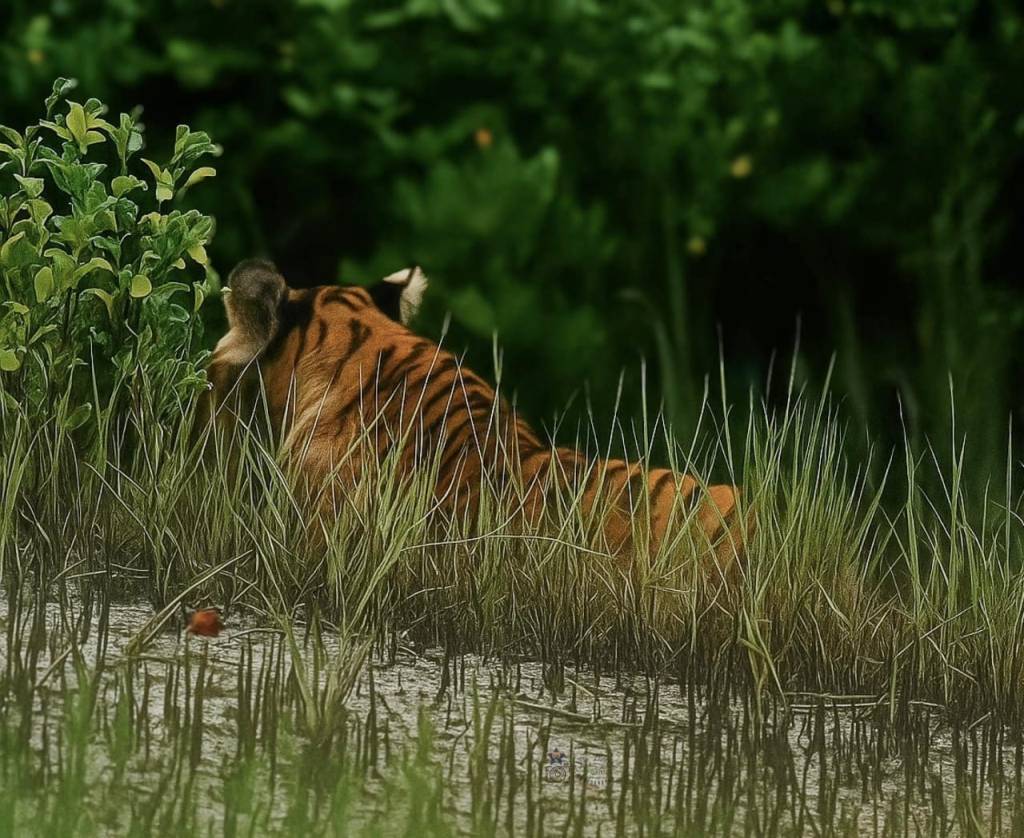
Go beyond the typical Sundarban Travel Guide. Discover the secret classification of the Royal Bengal Tiger from a local’s perspective. Learn about the ‘Gazi Tiger,’ the ‘Tourist’s Tiger,’ and the unseen predators of this UNESCO World Heritage Site.
The Royal Bengal Tiger’s true home is the jungle. And because the mangrove forest of the Sundarbans is so vast and varied, the narrative of the tiger—its behaviour, temperament, and very essence—changes from one location to the next. These stories are woven from the experiences of the People of Sundarbans: the crab and fish collectors, the forest workers, and the wildlife tourists who embark on a Sundarban tour.
This post explores the tigers of the Sundarbans through the eyes of the local people who know them best. Each perspective holds a piece of the truth. Together, they form a complex portrait of the forest life and its apex predator, far more detailed than any textbook. Let’s explore this local classification, moving from north to south across this incredible mangrove ecosystem.
1. The STR Tiger vs. The Divisional Forest Tiger
Locals distinguish between tigers in the Sundarban Tiger Reserve (STR) and those in the South 24 Parganas Divisional Forest. According to field workers, STR tigers are often considered more aggressive and confident, a trait attributed to a higher abundance of prey. While not based on official data, this belief is strongly held and shapes the caution with which people enter different zones, highlighting the constant reality of human-wildlife conflict.
2. The ‘Bada’ Tiger: Majestic Lord of the Eastern Forest
Roaming the open forest areas (Bada) of the Basirhat Range, this tiger is described as having a majestic appearance and a calmer temperament. Consequently, conflict rates here are lower, a positive development for the Mowal (honey collector) teams working in the region.
3. The Jhila Tiger: The Elusive Boat-Attacker
The Jhila forest block is a known high-conflict zone due to high tiger density and intense human activity. A notable and alarming trend reported here is the tigers’ tendency to attack moving boats—a behaviour seen more frequently here than elsewhere. This entire block is off the tourist trail, a vast and wild jungle where the tigers remain unseen and truly wild.
4. The ‘Gazi’ Tiger: A Revered Forest Spirit
To the west of Jhila roams the “Gazi Tiger.” The term “Gazi” is a respectful honorific, often linked to the forest deity Dakshin Rai from Sundarban legends. This tiger is revered throughout the jungle as a symbol of the forest’s power.
5. The Sajnekhali Tiger: The Tourist’s Tiger
This is the tiger of the main tourist zone and the most frequently sighted tiger in the Sundarbans. Often seen during a Sundarban safari or river cruise, these tigers have grown somewhat accustomed to human presence. They are the most photographed tigers, often seen resting on mudflats, offering the best chance for a tiger sighting and incredible wildlife photography.
6. The National Park Core Area Tiger: The Unseen Legend
The true core of the Sundarban National Park is home to the most remote tigers. Rarely seen, their aggression and ferocity are legendary among the few fishermen and forest staff who venture there. They represent the untamed heart of the Sundarbans.
7. The Tiger of Herobhanga: The Corridor Dweller
Herobhanga is no longer a permanent residence but serves as a crucial corridor, with tigers passing through, particularly in winter. It acts as a transient zone between major tiger territories.
8. The Kulaatli Tiger: The Village Wanderer
This tiger frequently makes headlines for straying into villages near the Kulaatli block. Despite their proximity to human settlements, clear sightings in this jungle-village interface are incredibly rare, though the tiger population here is believed to be increasing.
9. The Ajmalmari Tiger: The Shy Southern Predator
The main habitat here is around Bonnie Camp, the southernmost point accessible to tourists. While the area offers good sighting opportunities, the tigers here are known to be secretive and shy. It remains a significant conflict zone due to livelihood activities.
10. The Southern Tiger: The Sea-Facing Hunter
In the southernmost part of the forest, these tigers live near the Bay of Bengal. Their lifestyle is distinct, with a diet heavily supplemented by prey from the sea lagoons, giving them a unique appearance and behaviour.
11. The New-Settler Tiger: A Sign of Expansion
Dhanchi Island represents the westernmost expansion of the tiger’s territory. Tigers are believed to have colonized this new area due to population growth—a positive sign for conservation.
12. The ‘Bali’ Tiger: The Sandbank Specialist
Across the Matla river, in the sandy riverine islands, lives what locals call the “Bali Tiger” (Bali means sand). These tigers are uniquely adapted to the sandy terrain of the eastern Indian Sundarbans.
Frequently Asked Questions (FAQ) about Sundarbans Tigers
1. Are these actually different species of tigers?
No, all these tigers are Royal Bengal Tigers (Panthera tigris tigris). The local classifications are based on observed behaviours, temperaments, and physical characteristics that have developed due to the unique environment of each specific territory within the vast Sundarbans.
2. Which Sundarbans tiger is considered the most aggressive?
According to local belief and anecdotal evidence from forest workers, the tigers within the core Sundarban Tiger Reserve (STR) are often considered more aggressive and confident than those in the divisional forest areas.
3. As a tourist, where is the best place to get a tiger sighting?
The Sajnekhali Wildlife Sanctuary, home to the “Sajnekhali Tiger,” offers the best and most frequent opportunities for a tiger sighting. The tigers here are more accustomed to the presence of houseboat tours and safari boats.
4. Why do some tigers in the Sundarbans attack boats?
This is a rare but documented behaviour, most notably reported in the Jhila forest block. The exact reasons are unknown, but theories suggest it could be due to territorial defensiveness, curiosity, or the high pressure from human activity in that specific area.
5. Is a Sundarban tour safe with all these different tiger temperaments?
Yes, a Sundarban tour is very safe when conducted with registered tour operators who follow strict forest department rules. Tourist boats are restricted to specific, safe channels, and trained guides accompany every trip. The classifications discussed here are primarily relevant to locals who enter deep into the forest for their livelihood.
#Sundarbans #BengalTiger #TigerBehavior #WildlifeOfIndia #Conservation #HumanWildlifeConflict #SundarbanTigerReserve #LocalFolklore #WildlifeTourism #IndianWildlife #TigerClassification #RoyalBengalTiger #SundarbanTour #MangroveForest #UNESCOWorldHeritageSite #TigerSighting #WildlifePhotography #BirdWatching #SundarbanSafari #Ecotourism #WestBengalTourism #PeopleofSundarbans #Bonbibi #MangroveEcosystem #Biodiversity #SundarbanItinerary #WildlifeinSundarbans #NaturePhotography #ForestLife
#Sundarbans #BengalTiger #TigerBehavior #WildlifeOfIndia #Conservation #HumanWildlifeConflict #SundarbanTigerReserve #LocalFolklore #WildlifeTourism #IndianWildlife #TigerClassification #RoyalBengalTiger #SundarbanTour #MangroveForest #UNESCOWorldHeritageSite #TigerSighting #WildlifePhotography #BirdWatching #SundarbanSafari #Ecotourism #WestBengalTourism #PeopleofSundarbans #Bonbibi #MangroveEcosystem #Biodiversity #SundarbanItinerary #WildlifeinSundarbans #NaturePhotography #ForestLife
 Samiran Mandal
11 responses to “The Many Faces of the Sundarbans Tiger: A Local’s Guide to 12 Unique Identities”
Very interesting read. I will visit.
LikeLike
They’re so majestic
LikeLike
What specific precautions are taken to prevent attacks? I saw a documentary where someone was wearing a mask to resemble a face
LikeLike
In the back of their head
LikeLike
All things evolve. Really appreciate the description of the different “phenotypes”
LikeLike
Fasinating!
LikeLike
Fascinating.
LikeLiked by 1 person
I’ve sailed on one of those tiger seeking cruises along South India’s rivers before and found them uncurious to our passing existence at the time.
LikeLiked by 1 person
Thanks for your valuable comments 🙏
LikeLike
Glazing post coming up 😃🐅: https://wearingtwogowns.blog/2025/09/16/eye%f0%9f%91%81-of-the-tiger%f0%9f%90%85-a-fellow-blogger-inspired-post/
LikeLiked by 3 people
Thanks 👍
LikeLiked by 1 person