
The Sundarbans, a labyrinthine marvel of mangrove forests, is far more than just a natural wonder; it’s a testament to the profound and often perilous relationship between humans and nature. Here, where land meets sea in a wild embrace, live communities whose lives are inextricably woven with the rhythms and risks of the jungle. Their unique culture, rich in traditional beliefs, spiritual rituals, and a deep-seated respect for nature, offers a compelling study of resilience and adaptation.
Life on the Edge: Where Uncertainty Forges Faith

For generations, Sundarbans forest dwellers – honey collectors, crab gatherers, and woodcutters – have faced a daily battle for survival. The constant threat of tiger attacks in Sundarbans, lurking crocodiles, and venomous snakes makes every excursion into the mangrove forest a gamble with life itself. In the absence of modern communication, families left behind endured agonizing uncertainty, fostering a profound spiritual dependence.

This pervasive uncertainty of forest life became the crucible in which their unique faith was forged. The jungle is not just a resource; it’s reverently called “Ma’er Khamar” – the Mother’s Farm. To extract from it requires not just skill, but also the Mother’s blessing and permission.

Bonobibi: The Sacred Guardian of the Forest
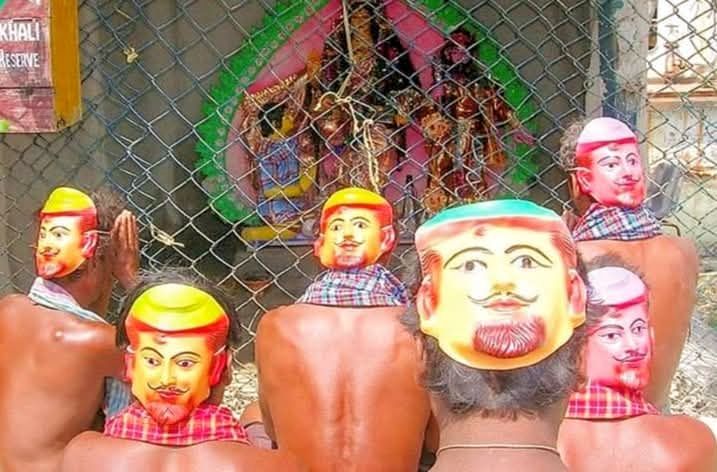
Central to these Sundarbans beliefs is the worship of Bonobibi, the revered forest deity. Whether seen as a manifestation of Ma Kali or Ma Bishalakshmi, Bonobibi is the protector, the guardian who stands between the forest dwellers and its dangers. Before embarking on any expedition, Bonobibi puja is meticulously performed, accompanied by sacred chants and specific rituals. These practices are not mere superstition; they are a vital form of mental preparation for forest work, a plea for protection in an unforgiving environment.
Throughout the southern Sundarbans, ancient Bonobibi shrines stand as silent witnesses to this enduring faith. Remarkably, this is a testament to a syncretic society where both Hindu and Muslim communities participate in Bonobibi rituals, highlighting a rare and beautiful interfaith harmony in Sundarbans.
Adapting to Change: The Evolution of Sundarbans Culture
While the core beliefs remain strong, Sundarbans culture is not static. It is a living entity, constantly adapting to internal and external pressures:
- Shifting Livelihoods: The Forest Department and various social organizations are actively working to reduce dependency on jungle resources. What was once a hereditary profession is now seeing socio-economic changes in Sundarbans, pushing many towards alternative livelihoods.
- Modern Challenges: Despite some improvements in communication, deep jungle areas remain isolated, perpetuating the inherent dangers of Sundarbans livelihoods.
- Changing Social Norms: Traditional family customs once observed by women during their husbands’ absences – such as strict dress codes or dietary restrictions – are gradually easing, reflecting a subtle modernization in Sundarbans villages.
- Eroding Solidarity: The once unbreakable group solidarity in Sundarbans, crucial for rescue operations during wildlife attacks and community support, has unfortunately diminished. Instances of “Hekatipona” (breaking discipline) are becoming more common, impacting community cohesion in Sundarbans.
- Decline of Traditional Healers: Faith in the protective “mantras” of the ‘Gunin’ or ‘Baule’ (traditional healers) to ward off tigers has waned. This decline of traditional healers in Sundarbans is partly due to the tragic reality of some gunins themselves falling victim to the very dangers they sought to control, along with a generational shift away from these ancient practices.
More Than Superstition: Ethics and Sustainability
The rituals and beliefs of the forest dwellers are not solely rooted in fear or religion. They encapsulate a profound Sundarbans forest ethics that promotes sustainable resource harvesting in Sundarbans.
- Greed’s Peril: A powerful teaching is that excessive greed leads to disaster. From “Ma’er Khamar,” one must only take what is needed, fostering a deep sense of moderation and environmental respect.
- Honesty and Discipline: Crucial for group survival in the Sundarbans, these principles emphasize honesty, mutual cooperation, and strict adherence to rules – not just spiritual values, but practical survival strategies.
- Respect for the Sacred: The proscription against waste disposal in the jungle or the custom of entering barefoot underscores the sacredness of the Sundarbans forest, highlighting a spiritual reverence for their natural home.
Women’s Evolving Role: A New Chapter

Historically, women’s roles in Sundarbans forest work were minimal, constrained by physical demands and dangers. However, societal tides are turning. Driven by economic pressures Sundarbans families face and evolving social norms, more Sundarbans women are now joining as “nityamara” (daily forest dwellers), marking an increase in female participation in Sundarbans livelihoods. This represents a significant shift, showcasing their resilience and determination in a changing world.
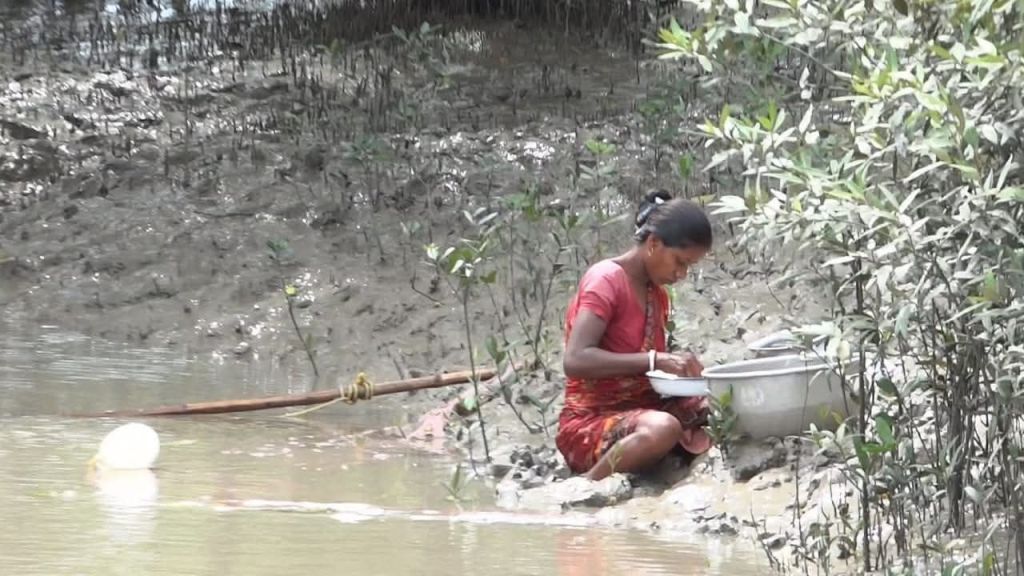
The Sundarbans delta inhabitants continue to adapt, their traditions evolving as they navigate the intricate dance between ancient beliefs and modern realities. Their story is a powerful reminder of human ingenuity, spiritual depth, and the enduring quest for harmony with the wild.

 Samiran Mandal
15 responses to “Navigating the Wild: The Enduring Beliefs and Changing Lives of Sundarbans Forest Dwellers”
This the month of Elul, ‘the King is in the Field’. Meaning, its a time for Jews to remember the oaths sworn by the Avot to create time-oriented Av Torah commandments which continually create the chosen Cohen people יש מאין.
What does Midah k’neged Midah mean? The concept of “Midah k’neged Midah” (measure for measure) is a fundamental principle in Jewish thought and ethics, particularly within the context of the Torah and later interpretations in the Talmud. This principle emphasizes the idea that one’s actions have corresponding consequences, reflecting a moral order in the universe.
This phrase, divorced from the Torah constitutional mandate which authorizes Great Sanhedrin courts to exercise Legislative Review over the governments of Tribes or even kings of Israel, suggests something akin to an assimilated idea of Karma. Which literally means “action” or “deed” in Sanskrit. It encompasses not just physical actions but also thoughts and intentions. The principle asserts that good actions lead to positive outcomes, while negative actions result in adverse consequences.
Jews in exile often navigate between their traditional beliefs and the surrounding cultures. This can lead to varying degrees of assimilation, which may affect their understanding and practice of concepts like “Midah k’neged Midah.” Jews in exile often face the challenge of maintaining their identity while adapting to the surrounding cultures. This can lead to a reinterpretation of traditional concepts, such as “Midah k’neged Midah,” as they integrate elements from their host cultures. The assimilation of ideas can sometimes dilute the original meanings or lead to new interpretations that resonate with contemporary experiences.
Jews living in exile often navigate the complexities of maintaining their cultural and religious identity while adapting to the surrounding societies. This can lead to a reinterpretation of traditional concepts, including Midah k’neged Midah. The integration of surrounding cultural elements can influence how Jewish communities understand and practice their beliefs. This may result in a blending of ideas, where traditional concepts are viewed through the lens of contemporary experiences and values. This dynamic Midah k’neged Midah directly refers to the conflict between the Yatzir Ha’Tov vs. the Yatzir Ha’Raw within the heart. Specifically it contrast tohor vs. tumah middot! ה’ ה’ אל רחום וחנון וכו, the revelation of the 13 Oral Torah middot at Horev on Yom Kippur serves as the יסוד meaning of Midah k’neged Midah. Yet g’lut Jews cursed by the Torah curse of not obeying the Torah לשמה, they can not discern one tohor middah from another or even tohor middot vs tumah middot in the eternal struggle of Yaacov and Esau within the womb of Rivka.
LikeLiked by 2 people
This was an interesting read.
LikeLike
Welcome 🤗
LikeLiked by 1 person
Excellent! Thank you for sharing this!
LikeLike
Welcome 🤗
LikeLike
Your blog paints a vivid picture of a community shaped by its environment, where survival, faith, and ethics are intricately woven together. It also shows that this culture is not static; it is a living entity, adapting to the pressures of modernization and a changing world.👌 thanks for writing and sharing 🙂
LikeLiked by 1 person
Welcome once again and thanks for your valuable comments 🙏
LikeLiked by 1 person
Dear Samiran
I was quite impressed by your post. It has given a new point of view.
Thanks for liking my post, ‘Supreme’ 🙏
LikeLike
‘ quite’ impressed? …..
LikeLike
WHAT A WONDERFUL WAY TO EXPLAINING LIFE IN THE SUNDERBANS. Beautifully crafted.
LikeLiked by 1 person
Welcome and thanks for your valuable comments 🙏
LikeLike
This is a great post on a community transitioning with the changing of norms and the impact of climate on their way of life. The shift in gender roles to allow women a more visible and vocal voice is keeping with the global trend though faced with significant pushback from anti-rights advocates.
LikeLike
Thanks for your valuable opinion 👍
LikeLike
Wow…an amazing post!
LikeLiked by 3 people
Thanks 🙏
LikeLiked by 1 person